How to Winterize Your Spray Foam Rig for Canadian Winters
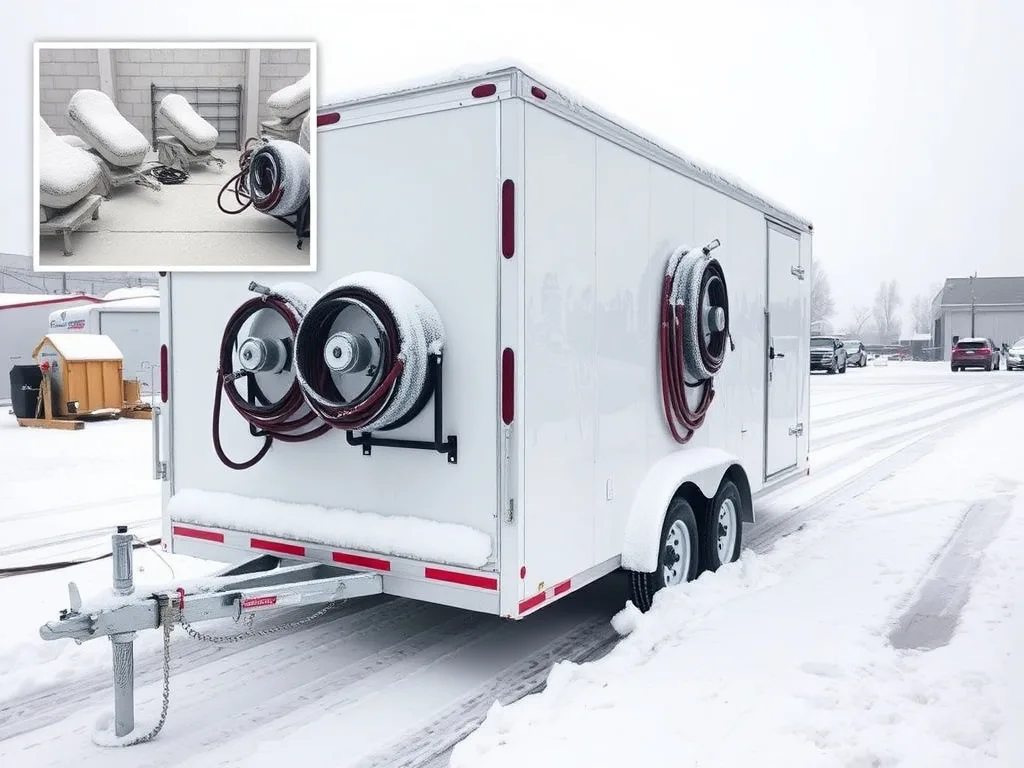
A Canadian winter doesn't care about your production schedule. Once overnight lows start dropping toward -20°C on the prairies or the wind comes off the Great Lakes in December, a rig that isn't ready for it will cost you billable days, expensive callouts, and in the worst cases a proportioner or generator rebuild that could have been avoided with a few hours of prep in October.
Winterizing a spray foam rig isn't about the chemical itself — that's your supplier's job to manage in storage. It's about making sure your rig's own heated-hose system, generator, and trailer can hold and deliver the right operating conditions on a job site when it's -15°C outside and your crew is on the clock. This guide covers the mechanical side: what to inspect, what to upgrade, and what to check every single cold morning before the first shot of foam goes out the gun.
Why Winter Prep Is a Different Job Than Summer Maintenance
Spray foam sprays cleanly in a fairly narrow window — generally 70-90°F (21-32°C) at the gun, and most systems won't atomize correctly if material temperature drops much below about 50°F (10°C). Your rig doesn't control that with luck; it controls it with a heated hose bundle, a proportioner that's actually holding temperature, and an insulated trailer shell keeping ambient cold off the lines and pumps. In a Canadian winter, all three of those systems are working far harder than they do in July, and all three need to be checked before they're asked to perform, not after they've already failed on a job.
Heated Hose Bundle and Trailer Insulation Prep
The heated hose bundle is the single most winter-critical component on the rig. It's what keeps material moving from the proportioner to the gun inside that 70-90°F range instead of arriving at the tip closer to ambient temperature. Before the cold sets in, walk the full length of every hose in the bundle and check for:
- Cracked, worn, or compressed outer insulation jacket — any exposed section will lose heat fast in a cold wind
- Heat trace wire continuity along the full hose length, not just at the connections
- Thermostat and temperature controller accuracy — verify the readout against a separate infrared thermometer at the gun end
- Whip hose and connector condition, since these short sections are often the least insulated part of the run and the first to underperform in the cold
- Storage reel or box condition, so hoses aren't left coiled outside the trailer's heated envelope between jobs
On the trailer side, confirm the insulated wall and floor panels haven't been compromised by a season of loading, drilling, or minor collision damage, and that any heater or heat source inside the trailer cavity itself is functioning and properly vented. A rig with a compromised trailer shell forces the heated hose system and generator to work overtime just to hold baseline temperature, which shortens component life and increases fuel burn on every job.
Generator Prep and Sizing for Winter Loads
Cold weather increases the electrical load on a rig — heat trace, cab heaters, block heaters, and longer proportioner run times all draw more continuous power than a mild-weather job does. Most rigs run diesel generators in the 21-60kW range or gas units around 18-22kW, sized to total connected wattage plus about 15% headroom. That headroom matters more in winter, when several heated systems are pulling simultaneously instead of cycling independently.
- Run the generator under full simulated load (heated hose, gun heater, and any cab or trailer heat together) before the season starts, not just at idle
- Service or replace the block heater and confirm the cord and outlet are in good condition for overnight plug-in on job sites
- Change to a winter-weight engine oil per the manufacturer's cold-start spec
- Inspect the battery, terminals, and cold-cranking amp rating — a marginal battery that started fine in September will often fail on the first -20°C morning
- Confirm the enclosure's cold-air intake and exhaust aren't restricted by ice or snow buildup during storage
Winter-Grade Diesel and Fuel Additives
Fuel gelling is one of the most common and most preventable winter breakdowns on a diesel-powered rig. As temperatures drop, paraffin wax naturally present in diesel fuel begins to crystallize, clogging fuel filters and starving the generator or truck engine of fuel — usually at the worst possible moment, like a cold start on a remote job site. Most fuel retailers switch to a winter blend automatically once seasonal temperatures drop, but that blend isn't always aggressive enough for the coldest prairie or northern routes, and a rig sitting with summer-blend fuel in the tank from a late-season fill-up is a real risk.
A quality anti-gel additive, added at every fill-up once temperatures start trending toward freezing, lowers the fuel's cold filter plugging point and keeps wax crystals from forming into blockages. Pair that with fresh fuel filters going into the season — a filter that was borderline in October will often be the first thing to fail in a December cold snap — and, where the rig sits outside overnight, a tank heater or insulated fuel line on the generator side. None of this is exotic maintenance; it's cheap insurance against a generator that won't start when a crew is standing on site waiting for heat and material temperature to come up.
Pre-Job Warm-Up Timelines
Even a properly winterized rig needs time to get every system into its working range before the first pass of foam. Rushing this step is one of the most common causes of off-ratio spraying complaints in cold weather, and it has nothing to do with the proportioner malfunctioning — it's simply material and hose temperature that hasn't caught up yet.
- Above -5°C: generator and heated hose typically reach operating temperature in 20-30 minutes
- -5°C to -15°C: budget 30-45 minutes minimum before test-spraying, and recheck gun-tip temperature before starting the job
- Below -15°C: allow 45-60 minutes or more, and consider a longer generator idle period before putting the hose system under load
- Always confirm actual material temperature at the gun with an infrared thermometer rather than relying on elapsed time alone — cold wind, an underperforming heat trace section, or a partially degraded thermostat can all extend the real warm-up window
Building these timelines into your morning routine — and into your crew's expectations — prevents the temptation to start spraying before the rig is actually ready, which is where most winter quality complaints originate.
Pre-Winter Rig Maintenance Checklist
Run through this list before the first hard freeze, and again at the midpoint of the season if the rig is running hard:
- Proportioner: check pump packings and seals for cold-weather hardening, verify ratio accuracy at operating temperature, service per manufacturer's seasonal interval
- Heated hose bundle: full-length insulation and heat trace inspection, thermostat calibration check, whip hose replacement if worn
- Generator: full-load test, block heater service, winter-weight oil change, battery and cold-cranking amp check, air intake/exhaust clearance
- Fuel system: switch to anti-gel additive program, replace fuel filters, confirm winter-blend diesel at every fill
- Trailer: inspect insulated wall/floor panels for damage, confirm interior heat source is functioning and vented correctly, check door seals for cold-air infiltration
- Air lines and dryer: drain and check for moisture that can freeze and block lines overnight
- Spare parts kit: stock cold-weather wear items (heat trace sections, thermostat, filters) so a minor failure doesn't become a lost job day waiting on parts
A rig that isn't ready for winter doesn't fail gracefully — it fails on the coldest morning of the job, in front of the crew and the schedule. If your current rig needs pre-season service or a hose and generator inspection before the freeze sets in, or you need a rental unit to cover a job while yours is in the shop, call 844-967-5247 or email josh@contractorschoiceagency.com to get on the schedule.
Frequently Asked Questions
Most rigs are set up to hold material in roughly the 70-90°F (21-32°C) range at the gun, since that's where spray foam atomizes and applies consistently. Material temperature shouldn't be allowed to drop below about 50°F (10°C), which is why the hose bundle's insulation and heat trace condition matter so much once ambient temperatures fall well below freezing.
As a general guide, budget 20-30 minutes above -5°C, 30-45 minutes between -5°C and -15°C, and 45-60 minutes or more below -15°C. Always confirm actual gun-tip material temperature with an infrared thermometer rather than going by elapsed time alone, since wind, hose condition, and generator load all affect how fast the system actually reaches operating temperature.
Yes. Fuel retailers typically switch to a winter blend as temperatures drop, but adding a quality anti-gel additive at every fill-up, replacing fuel filters going into the season, and using a block heater or tank heater for overnight parking are the most effective ways to prevent fuel gelling and cold-start failures on a diesel-powered rig.
Run the full pre-winter checklist before the first hard freeze, then do a mid-season check on heated hose insulation, generator battery condition, and fuel filters if the rig is running a heavy schedule. Rigs working consistently in extreme cold or high-mileage routes often benefit from a service check every 4-6 weeks through the coldest stretch of the season.
Have questions about the right rig for your crew?
Call, email, or request a quote and we'll help you spec the setup that fits your jobs, budget, and season.