Rig Financing & Leasing
Term financing and lease-to-own programs for new and used spray foam rigs, structured around what contractors actually qualify for and what a proportioner rig actually costs to own.
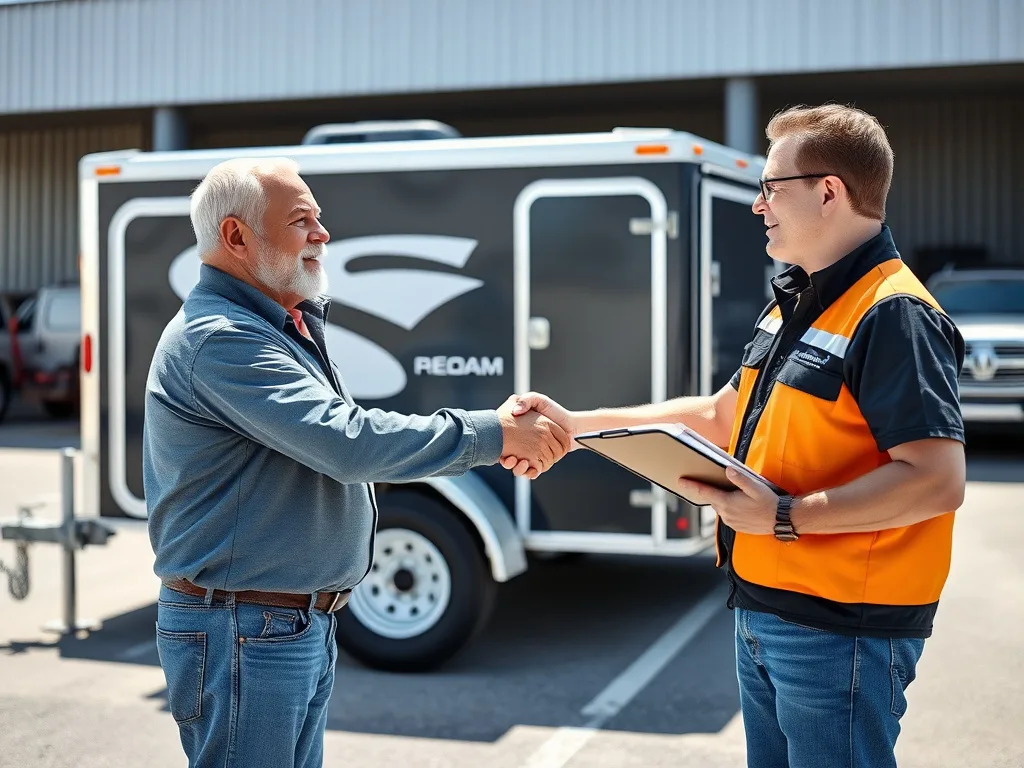
A fully equipped spray foam rig runs $150,000 to $250,000+ CAD new, or from roughly $60,000 for a well-reconditioned used unit — numbers that put most rigs out of reach as a cash purchase for anyone but an established multi-crew operation. Financing and leasing exist precisely because of that math, and in this industry they're not a fallback option, they're the standard way rigs get bought.
We work with contractors across Canada — coast to coast, one-truck operators and growing fleets alike — to structure financing or lease-to-own terms around the rig itself, not just a generic equipment-loan template. That matters because a proportioner-and-trailer package holds its value differently than a pickup truck or a skid steer, and a lender or lease structure that understands the asset gets you better terms than one that doesn't.
This page covers how term financing and lease-to-own actually differ, what rates and terms to expect on new versus used rigs, what a $0-down program requires in return, what underwriters are actually looking at when they review a contractor's file, and how the picture changes once you're financing a second or third rig instead of your first.
What You Get
- Terms up to 60 months on new rig purchases, up to 36 months on used/reconditioned units
- $0-down programs available for qualifying contractors — no need to drain working capital on a down payment
- Lease-to-own structures that build toward ownership without a balloon surprise at the end
- Startup-friendly underwriting path for new contractors without years of business history
- Fleet financing support for adding a 2nd or 3rd rig without restructuring existing debt
- Financing paperwork handled alongside the purchase — one point of contact from quote to funded rig
Ideal For
- New and startup contractors buying their first rig without enough cash to pay outright
- Established operators replacing an aging rig who want to preserve cash for payroll and materials
- Crews adding a second or third rig to take on more simultaneous jobs
- Contractors comparing a used rig purchase against financing a new one
- Businesses that prefer predictable monthly payments over a large upfront capital outlay
- Buyers weighing lease-to-own against a straight term loan for tax or cash-flow reasons
Term Financing vs. Lease-to-Own
Term financing is a straightforward equipment loan: you borrow against the rig's purchase price, make fixed monthly payments over a set term, and own the rig outright once the loan is paid off. Interest is calculated on the full purchase amount from day one, and the rig itself typically serves as collateral, which is part of why rates on rig financing tend to be more favorable than unsecured business credit.
Lease-to-own works differently. You make payments structured more like a lease over the term, with either a nominal buyout at the end (a $1 or $10 buyout lease) or a small residual payment to take full ownership. For contractors who want the rig on the books as a financed asset from day one but prefer a payment structure that can be lighter in the early months, lease-to-own is often the more flexible route — and it can have different tax treatment than a term loan, which is worth reviewing with your accountant before you sign.
Neither structure is universally better. A contractor with strong credit and a clear plan to run the rig for 8-10 years usually comes out ahead with a term loan, since the total interest cost is transparent and the rig is fully theirs partway through the term. A contractor who wants to keep monthly payments as low as possible while cash flow ramps up, or who likes the idea of a defined path to ownership without a large lump-sum purchase, often leans toward lease-to-own. We walk through both structures against your actual numbers before you commit to either.
- Term financing: fixed payments, full ownership at loan payoff, interest on full purchase price
- Lease-to-own: lease-style payments, nominal or residual buyout at term end, potentially different tax treatment
- Both use the rig as collateral, which typically improves the rate versus unsecured borrowing
- The right structure depends on how long you plan to run the rig and your current cash position
Typical Terms: New Rigs vs. Used Rigs
Financing terms track the rig's expected service life, which is why new and used units are underwritten differently even when the buyer's credit profile is identical. New, fully-equipped rigs typically qualify for terms up to 60 months at rates around 5.99%, reflecting both the longer expected working life of new equipment and the manufacturer warranty coverage that protects the lender's collateral value for the first several years.
Used and reconditioned rigs carry shorter terms — typically up to 36 months — at rates around 4.95%. That shorter window isn't a penalty; it's a reflection of the asset's remaining service life and the fact that warranty coverage on a used rig is usually more limited than on new equipment. A used rig at a lower purchase price with a shorter term can still land at a comparable or lower monthly payment than a new rig, which is part of why the new-vs-used decision and the financing decision really need to be worked through together rather than separately.
Rates on any given deal will move with your credit profile, the specific rig, and the lender, so treat the figures above as the range we see most often rather than a guaranteed quote. Pre-qualification tells you where you actually land before you commit to a specific rig.
- New rigs: terms up to 60 months, rates around 5.99%
- Used/reconditioned rigs: terms up to 36 months, rates around 4.95%
- Shorter used-rig terms reflect remaining service life and typically shorter warranty coverage
- Monthly payment, not just rate, is the number to compare across new vs. used options
Down Payment Expectations and $0-Down Programs
Down payment requirements vary by lender, rig condition, and buyer profile, but most financed rig purchases fall somewhere in the 10-20% range of the purchase price. Putting money down reduces the financed amount, typically improves the rate you're offered, and signals to the lender that you have skin in the deal — all of which can matter more on a first rig than on a fourth.
$0-down programs are available for qualifying contractors, and they exist specifically because a rig purchase can otherwise tie up capital a growing crew needs for payroll, fuel, and materials in the meantime. Qualifying for $0-down typically means a stronger credit profile, an established business history, or a lender relationship built on a prior financed rig performing well. It's not automatic, but it's a realistic option worth asking about before assuming a large down payment is required.
If a full $0-down structure isn't available on your file, a partial down payment — even 5-10% — can still meaningfully move the needle on rate and monthly payment versus financing the entire purchase price. We'll walk through what your specific down payment options look like once we have your business and credit information in front of us.
- Typical down payments run roughly 10-20% of purchase price
- $0-down programs exist for qualifying contractors — ask before assuming you need a large deposit
- Any down payment reduces the financed balance and usually improves the offered rate
- Partial down payments (5-10%) can still meaningfully improve terms versus zero down
What Lenders Look For
Rig financing underwriting looks at the same core factors any equipment lender considers, with a few industry-specific wrinkles. Time in business is the biggest one — an established contractor with two or more years of revenue history and steady job volume is a straightforward approval in most cases. Credit profile, both business and personal, matters too, particularly for newer companies where the lender doesn't yet have a track record to lean on.
For startup and new contractors without years of history, a solid business plan carries real weight. That means realistic revenue projections tied to actual booked or pipeline work, a clear picture of crew size and job capacity, and evidence of relevant experience — even if it's experience gained working for another spray foam operation before striking out independently. Lenders in this space have seen enough spray foam startups to know the difference between a plan built on real numbers and one that's aspirational.
Other factors that help: a down payment (even a modest one), an existing relationship with a lender from a prior equipment purchase, and choosing a rig configuration that's proven in the market rather than an unusual custom build, since more common configurations hold resale value better and represent lower collateral risk to the lender.
- Time in business — 2+ years with steady revenue is the easiest approval profile
- Personal and business credit profile, weighted more heavily for newer companies
- For startups: a realistic business plan with booked/pipeline work and relevant crew experience
- Down payment, prior lender relationship, and a proven (not unusual custom) rig configuration all help
Financing a Second or Third Rig
Adding a second or third rig is a different financing conversation than the first purchase, and usually an easier one once the first rig is performing well. A contractor with an existing financed rig that's been paid on time for a year or more has effectively built a credit track record with that lender, which typically streamlines approval on the next unit even while the first loan is still outstanding.
The underwriting question shifts from "can this business support a rig" to "can this business support two (or three) rigs running at once," which comes down to demonstrated job volume and crew availability rather than a hypothetical business plan. If you've got the work booked to keep a second crew and rig busy, that revenue picture is usually the strongest argument in the file.
It's also worth structuring multiple rig loans deliberately rather than letting them stack ad hoc — staggering terms so payoff dates don't all land in the same year, or consolidating financing with a single lender who already knows your business, can simplify cash-flow planning as the fleet grows. We help contractors think through fleet-level financing strategy, not just approve one rig at a time.
- A strong payment history on rig #1 typically streamlines approval on rig #2 or #3
- Underwriting shifts to demonstrated job volume and crew capacity, not a hypothetical plan
- Staggering loan terms across multiple rigs can simplify long-term cash-flow planning
- Consolidating financing with one lender that knows your business can speed up future approvals
What Affects the Price
Every quote is built around your crew's actual needs. These are the factors that move the number most.
New vs. used rig
New rigs qualify for longer terms (up to 60mo) at lower rates (~5.99%); used/reconditioned rigs run shorter terms (up to 36mo) at rates around 4.95% reflecting remaining service life.
Down payment amount
A larger down payment reduces the financed balance and typically improves the rate offered; $0-down programs are available for qualifying contractors.
Business history and credit profile
Established contractors with 2+ years of revenue history and strong credit generally see the most favorable terms; startups can qualify with a solid business plan and relevant experience.
Financing structure chosen
Term financing and lease-to-own carry different payment patterns and potential tax treatment, which can shift the effective cost of a given rig.
Common Questions
$0-down programs are available for qualifying contractors, typically those with a strong credit profile, established business history, or a solid track record with a lender from a prior equipment purchase. Not every buyer qualifies for full $0-down, but it's worth asking about before assuming you need a large deposit — a modest down payment can still open up better terms even when $0-down isn't available.
A term loan finances the full purchase price with fixed payments, and you own the rig outright once it's paid off. Lease-to-own uses a lease-style payment structure with a nominal or residual buyout at the end of the term, and can carry different tax treatment. Both use the rig as collateral; the better fit depends on how long you plan to run the rig and your current cash-flow priorities.
New, fully-equipped rigs typically qualify for terms up to 60 months at rates around 5.99%. Used and reconditioned rigs generally run shorter terms, up to 36 months, at rates around 4.95%, reflecting the rig's remaining service life and typically shorter warranty coverage.
Startups can and do qualify. Time in business helps, but a realistic business plan — booked or pipeline work, clear crew capacity, and relevant industry experience — carries real weight for newer companies without years of revenue history behind them. A down payment or an established lender relationship can also help offset limited business history.
Yes, and it's often more straightforward than the first approval once your existing rig loan has a track record of on-time payments. Underwriting on additional rigs shifts toward demonstrated job volume and crew capacity to support two or more units running at once, rather than a hypothetical business plan.
Explore Related Equipment & Services
Ready to talk financing & leasing?
Tell us what your crew runs and what you need, and we'll put together a clear, no-obligation quote.