Rig Service, Repair & Maintenance
Scheduled maintenance, off-ratio diagnostics, field and shop repair, and emergency dispatch to keep your proportioner, hoses, and gun running at spec.
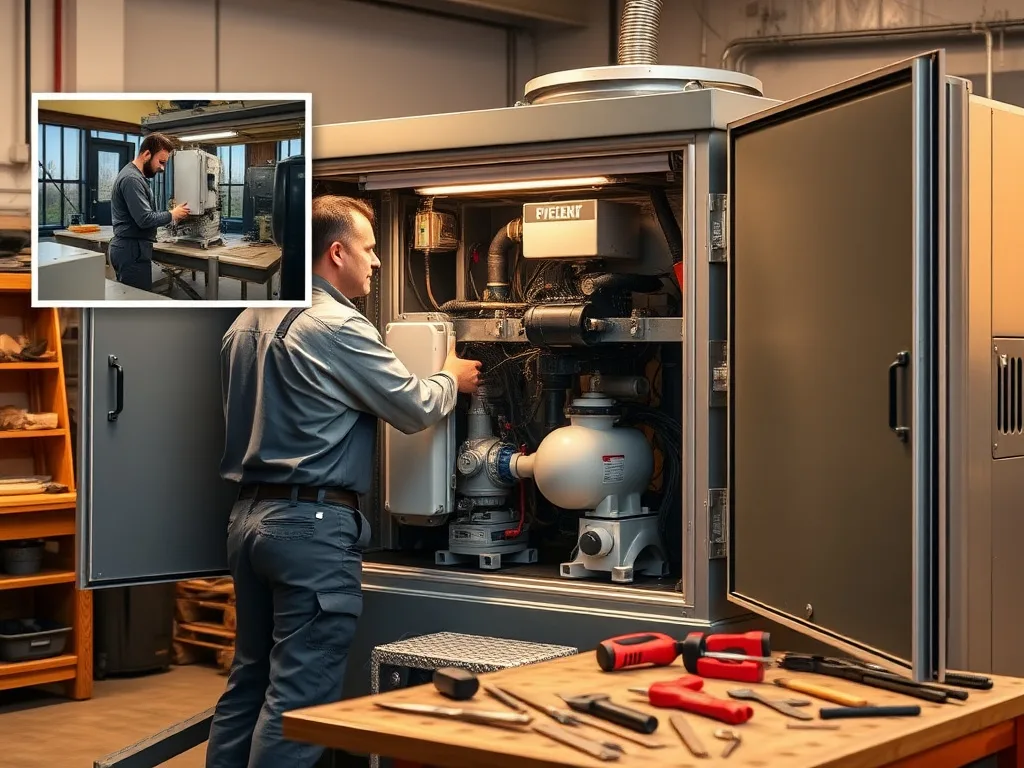
A spray foam rig only makes money while it's spraying at ratio. Every hour a pump is down, a hose is cold-spotting, or a gun is throwing streaks is an hour a crew stands around instead of billing a job. Rig Service, Repair & Maintenance is built around that reality: it's a program for keeping proportioners, transfer pumps, heated hose runs, and spray guns performing to spec, catching wear before it turns into a redo, and getting a down rig back in rotation as fast as possible when something does fail.
The program covers scheduled maintenance intervals matched to actual duty cycles rather than generic calendar dates, structured diagnostics for off-ratio spraying and pressure faults, a clear decision path between field/mobile repair and full shop drop-off, priority-scheduled emergency and rush repair when a rig goes down mid-project, and seasonal service — pre-season inspection ahead of ramp-up and post-season winterization of the rig's own mechanical systems heading into a Canadian winter.
Support spans the proportioner platforms most Canadian crews run — Graco Reactor 2 (E-XP2 and E-30 Elite), PMC, and Gusmer H-20/35 — plus the generators, heated hose bundles, and transfer pumps that keep them fed. Whether you need a technician on-site this afternoon or you're booking a fleet through pre-season checks before your busy season starts, the goal is the same: less downtime, fewer wasted sets, and a rig you can trust to hold ratio all day.
What You Get
- Maintenance intervals matched to real pump, hose, and gun duty cycles instead of a generic annual checkup
- Structured off-ratio diagnostics that isolate the failure to pump, hose, or gun before you burn a day chasing it
- Field and mobile repair dispatch to cut job-site downtime when a rig can be fixed where it sits
- Priority emergency and rush repair scheduling to get a down rig back in rotation fast
- Pre-season inspection and post-season winterization programs for single rigs or full fleets
- Technicians familiar with Graco Reactor 2, PMC, and Gusmer platforms plus generator and hose components
Ideal For
- Contractors running Graco Reactor 2, PMC, or Gusmer proportioners who need a real maintenance schedule instead of run-to-failure
- Crews seeing off-ratio spray, pressure imbalance, heat-fault codes, or streaking mid-job
- Owner-operators who need a down rig diagnosed and back in rotation without losing the week
- Fleets prepping multiple rigs for spring ramp-up or fall/winter shutdown
- Contractors without an in-house technician who need reliable field dispatch coverage across the country
Scheduled Maintenance Intervals for Pumps, Hoses & Guns
Most rig failures don't happen out of nowhere — they show up first as a slightly slower cycle time, a hose zone running a few degrees cold, or a gun tip that needs cleaning more often than it used to. Scheduled maintenance catches those signs before they turn into an off-ratio job or a mid-shift breakdown. Intervals are set around duty cycle (hours sprayed, not months on a calendar), so a rig running six days a week gets checked more often than one used occasionally.
At the component level, that means routine attention to the proportioner's ratio pump packings and seals, transfer pump priming and filter condition, heated hose zone temperatures and pressure drop across the full hose length, and gun tip and mix chamber wear. Catching a worn packing or a starting-to-clog filter during a scheduled visit is a parts swap; catching the same problem after it's already thrown a batch of off-ratio foam is a callback, wasted material, and a delayed job.
- Pre-shift: gun tip and mix chamber check, hose connections, fluid and fuel levels
- Weekly: proportioner pressure and ratio spot-check, heated hose zone temperature log
- Every ~250 hours: ratio pump packing and seal inspection, filter replacement
- Every ~500 hours: full hose pressure test, transfer pump inspection and rebuild-kit check
- Annual: complete proportioner teardown and inspection, generator service and load test
Common Failure Points & Diagnosing Off-Ratio Spraying
Off-ratio spray is the single most expensive failure mode on a rig, because the cost isn't just the repair — it's the wasted material and the rip-out risk on foam that already went up. The most common root causes trace back to a short list of components: worn ratio pump packings letting one side slip pressure, a heated hose zone drifting out of temperature range, a partially clogged or damaged filter starving one side of the system, air trapped in a line after a component swap, or a generator delivering inconsistent voltage under load.
Proper diagnosis works from the outside in: log pressure and temperature on both the A and B sides, run a test shot to confirm actual delivered ratio against the panel reading, and isolate whether the fault tracks with the pump, the hose run, or the gun. That sequence is what separates a 20-minute filter change from a full day of guessing — and it's why diagnostic work is billed and scoped separately from routine scheduled maintenance.
Ignoring an early off-ratio warning is almost always more expensive than fixing it. A pump that's a few percent off ratio doesn't just risk one bad set — it keeps degrading until the imbalance is obvious on the panel, by which point the packing or seal has usually worn further and the eventual rebuild costs more than an early swap would have. Logging pressure and temperature at every scheduled visit gives a baseline to compare against, so a technician can catch drift while it's still a minor adjustment instead of a mid-job failure.
- Ratio pump wear or packing failure causing pressure imbalance between A and B sides
- Heated hose zone failure or temperature drift affecting material viscosity in transit
- Clogged, damaged, or overdue filters restricting flow on one side
- Air intrusion after a component swap or hose disconnect
- Generator voltage fluctuation under load affecting pump and heater performance
Field & Mobile Repair vs. Shop Drop-Off
Not every repair needs the rig off the road. Component-level fixes — a filter change, a gun tip or mix chamber swap, a hose section replacement, packing adjustments, generator troubleshooting — are typically field-appropriate. A mobile technician can usually handle these on-site or at a job site, which keeps the rig in rotation and avoids a trailer haul.
Full pump rebuilds, precision ratio recalibration, structural trailer or truck-box work, and complex electrical faults are better handled with the rig at a shop, where the right tooling and a controlled environment make the job faster and more accurate. The decision usually comes down to scope: if it's a swap, it's a field call; if it's a teardown, it's a shop visit. Either way, the goal is matching the repair to the right setting so you're not paying shop rates for a field-scale job, or losing a full day to transport for something a technician could fix where the rig sits.
Because the fleet supports contractors across the country, field dispatch is scheduled around travel radius and job-site location as much as repair scope — a rig working a rural job an hour outside a service center is still a field-call candidate for most component work, while a rig based near a shop with a known teardown ahead of it may as well go straight to the bay. Either path gets confirmed up front so there's no guessing about turnaround before the crew commits a day to it.
- Field-appropriate: filter changes, tip/mix chamber swaps, hose section replacement, packing adjustment, generator troubleshooting
- Shop-appropriate: full pump rebuilds, precision ratio recalibration, structural repair, complex electrical diagnostics
Emergency & Rush Repair to Minimize Job-Site Downtime
A rig going down mid-project stacks costs fast: a crew standing idle, a job that slips its schedule, and — if the fault was off-ratio spraying that went unnoticed — a section of foam that may need to come back out. Emergency and rush repair scheduling exists to shrink that window. Priority dispatch puts a technician on the fault first, ahead of standard scheduled visits, and parts sourcing gets expedited rather than queued through normal order timelines.
For fleets or busy operators, having a rig-parts-components arrangement already in place for common wear items — gun tips, mix chambers, O-ring kits, pump repair kits, heated hose repair sections — cuts the turnaround on a rush job considerably, since the delay in most emergency repairs is parts lead time rather than labor. If a rig is going to be down longer than a job can absorb, that's also the point to talk through short-term rental coverage so a crew isn't sitting idle waiting on a repair.
Rush requests get triaged the same way every time: confirm the symptom over the phone, get a technician a realistic arrival window, and start sourcing likely parts before the truck even leaves so a second trip isn't needed. A five-minute call describing the fault — pressure codes, heat-fault lights, when the drift started — does more to shorten total downtime than anything else, because it lets the technician show up with the right part already in hand instead of diagnosing cold on-site.
Call 844-967-5247 or email josh@contractorschoiceagency.com to book scheduled maintenance, request an off-ratio diagnostic, or get emergency repair dispatched to a job site.
Seasonal Service: Pre-Season Inspection & Post-Season Winterization
Ramp-up season and shutdown season each put different stress on a rig, and both are worth a scheduled visit rather than just running the machine until something complains. Pre-season inspection, done before a spring workload ramps up, is a full check-through: pressure test, hose insulation and heat-trace condition, generator load test, and a ratio recalibration so the rig starts the season at spec instead of carrying wear from the last one into new work.
Post-season winterization is about protecting the rig itself through a Canadian winter — this is mechanical winterization of the rig's systems, not chemical storage. That means confirming heated hose zones and controls are functioning before storage, prepping the generator with winter-grade diesel additives and fuel stabilization, draining and protecting lines from freeze damage, and a general inspection so the rig comes out of storage ready to run rather than needing repair before the first job of the season. Material handling itself needs to stay in the roughly 70-90°F spray range and shouldn't be allowed to drop below about 50°F, which is a factor in how a rig's own heated systems and storage environment are set up going into cold weather — separate from any chemical storage or inventory question.
- Pre-season: full pressure test, hose and heat-trace inspection, generator load test, ratio recalibration
- Post-season: heated hose and control check, generator winter-grade diesel prep, line draining and freeze protection, storage-ready inspection
What Affects the Price
Every quote is built around your crew's actual needs. These are the factors that move the number most.
Field call vs. shop drop-off
Mobile dispatch for on-site diagnostics or repair carries a service-call rate; shop drop-off is typically billed on parts plus shop labor hours, which can run lower per hour but adds trailer transport time.
Diagnostic complexity
A straightforward tip or filter swap is quick to bill; isolating an off-ratio fault across pump, hose, and gun can take several hours of test shots and pressure logging before the actual repair even starts.
Parts availability by brand
Graco Reactor 2 parts are broadly stocked and usually fast to source; PMC and Gusmer components can carry order-in lead time that affects total repair turnaround.
Rush or emergency scheduling
Priority dispatch to get a down rig back in rotation ahead of standard scheduled appointments is billed at a premium over routine maintenance visits.
Common Questions
Packing and seal condition should be inspected on a duty-cycle basis rather than a fixed calendar date — roughly every 250 hours of spray time for most Graco, PMC, and Gusmer setups, with a full teardown and inspection annually. Rigs running near-daily need it checked more often than occasional-use units.
The most common causes are ratio pump wear or packing failure, a heated hose zone drifting out of temperature range, a clogged or overdue filter restricting one side of flow, air trapped in a line after a component swap, or generator voltage fluctuation under load. Diagnosis works through pressure and temperature logs and a test shot to isolate which component is actually at fault.
It depends on scope. Filter changes, gun tip and mix chamber swaps, hose section replacement, packing adjustment, and generator troubleshooting are typically field-appropriate. Full pump rebuilds, precision ratio recalibration, structural repair, and complex electrical faults are better handled with the rig at a shop.
It's mechanical winterization of the rig itself — checking heated hose zones and controls, prepping the generator with winter-grade diesel additives, draining and protecting lines from freeze damage, and a storage-ready inspection. It's separate from any chemical storage question, which is handled elsewhere.
Yes. Scheduled maintenance, diagnostics, field and shop repair, and seasonal service all cover Graco Reactor 2 (E-XP2/E-30 Elite), PMC, and Gusmer H-20/35 platforms, along with the generators, transfer pumps, and heated hose bundles that support them.
Explore Related Equipment & Services
Ready to talk service & repair?
Tell us what your crew runs and what you need, and we'll put together a clear, no-obligation quote.