Custom Rig Builds & Trailer Fabrication
Purpose-built spray foam rigs designed around your crew size, travel radius, and job mix — trailer, truck-box, or skid/slide-in, with custom electrical, generator, and multi-gun configurations built for Canadian operating conditions.
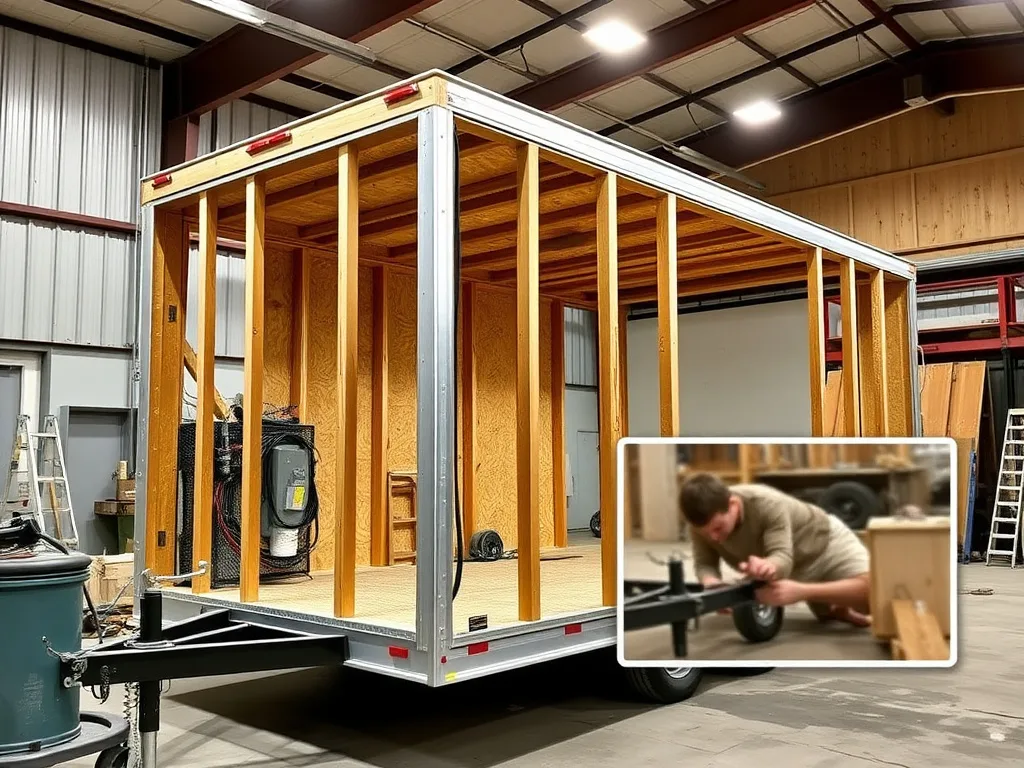
A stock rig configuration works fine until it doesn't. Once a contracting operation grows past a two-person crew, starts running routes with long highway legs, or needs a second gun online for large commercial pours, an off-the-shelf layout starts costing more in downtime and workaround than a purpose-built rig would have cost up front. Custom rig builds and trailer fabrication exist to solve that mismatch: instead of adapting your crew and route planning to whatever configuration a rig happened to ship with, the rig gets built around how your business actually operates.
This is fabrication work, not a parts catalog. Every build starts with a conversation about the job mix a contractor actually runs — residential retrofit versus new-construction commercial, tight urban routes versus multi-hour rural service radii, a two-person crew versus a four-person crew running two guns simultaneously — and the platform, electrical system, generator sizing, insulation package, and proportioner configuration all get specified around that answer rather than pulled from a generic build sheet.
Builds run across the three platform families that cover essentially every use case in the Canadian market: enclosed cargo trailers, truck-mounted (box) builds, and skid or slide-in units that drop into an existing pickup or flatbed. Each platform trades off differently on payload, tow/drive requirements, climate protection, and resale flexibility, and part of the build process is helping a contractor land on the right one before a single component gets ordered. From there, the build covers electrical and generator sizing, insulated-wall climate control for year-round operation, single- or multi-gun proportioner configuration, and — for contractors who want the finished rig to double as a moving billboard — exterior prep for vinyl wrap and branding.
Because this is a build-to-order process rather than inventory, lead times run longer than buying a rig off the lot, and pricing sits at or above the range for a fully-equipped new rig depending on how much customization goes into electrical, insulation, and multi-gun tooling. That tradeoff is the point: a contractor who needs a specific configuration gets it built right the first time instead of retrofitting a stock unit after the fact.
What You Get
- Platform matched to your actual travel radius and crew size instead of a generic stock layout
- Custom electrical and generator sizing specified for your real equipment load, not a one-size-fits-all default
- Insulated-wall packages that keep the rig operating through Canadian winters and summer heat alike
- Multi-gun and dual-proportioner configurations for crews running two applicators or splitting large commercial jobs
- Wrap-ready exterior prep so the finished rig reinforces your brand on every job site and highway mile
- One build partner from initial spec through delivery — no coordinating separate vendors for chassis, electrical, and proportioner install
Ideal For
- Growing operations moving from a single stock rig to a fleet with standardized specs across units
- Crews running long highway routes who need a platform sized correctly for fuel range and payload
- Larger crews (3-4+ applicators) who need multi-gun or dual-proportioner capacity to run two lines at once
- Contractors targeting large commercial or new-construction volume that a single-gun rig can't keep up with
- Operations building a recognizable fleet brand across multiple trucks and trailers
- Businesses replacing an aging rig who want to correct configuration mistakes baked into the original build
Trailer vs. Truck-Box vs. Skid/Slide-In: Matching the Platform to the Operation
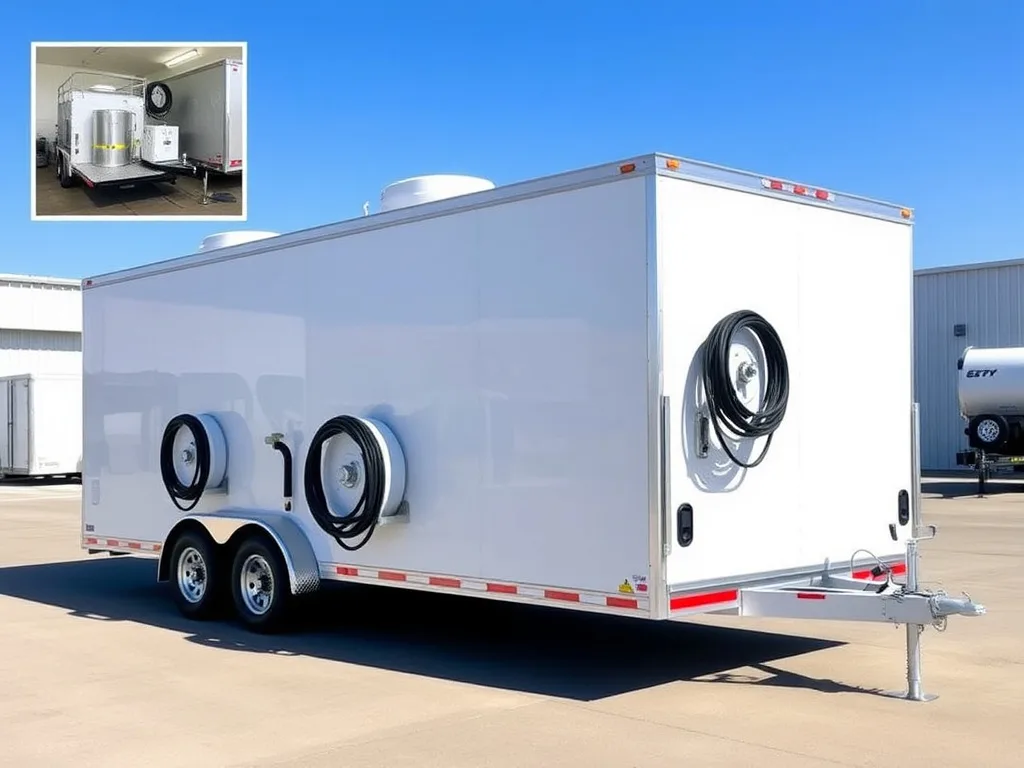
The platform decision drives almost every other spec on the build, so it's the first thing to lock down. Enclosed cargo trailers are the most common choice for full-time operations — they offer the most interior volume for proportioner, generator, hose reels, and storage, they can be detached from the tow vehicle at the yard or job site, and they're the easiest platform to standardize across a growing fleet since the tow vehicle doesn't need to match. Trailers suit crews running a dedicated tow vehicle within a moderate travel radius where hitching and unhitching at each stop isn't a bottleneck.
Truck-mounted (box) builds integrate the rig directly onto a cutaway or box-truck chassis. That configuration trades some interior flexibility for a tighter, more road-ready package — there's no trailer to back up, no hitch to inspect before every highway leg, and the whole unit handles like a single vehicle. Truck-box builds tend to suit contractors running long rural service radii or crews who value a single-vehicle setup for one- or two-person jobs, since there's less to manage at each stop and no separate trailer hitch or licensing class to track.
Skid or slide-in units are the third path — a self-contained proportioner/generator skid that drops into an existing pickup bed or flatbed rather than requiring a dedicated trailer or box truck. Skids suit a contractor who already owns a capable truck and doesn't want to add a second vehicle, or an operation that wants the flexibility to swap the skid between trucks. They carry less onboard capacity than a full trailer or truck-box build, so they suit smaller crews and lighter job mixes better than high-volume commercial routes.
Crew size and travel radius settle the decision fastest. A two-person crew running local work within an hour or two of the shop is well served by a skid or a mid-size trailer. A three- to four-person crew covering a province-wide territory with overnight routes benefits from the fuel range, storage, and ride comfort of a truck-box build or a larger insulated trailer. Larger commercial crews running multi-gun setups generally need the interior volume of a full trailer to fit two proportioners, two hose reels, and the electrical capacity to run both at once.
- Enclosed trailers: maximum interior volume, best for standardizing specs across a growing fleet
- Truck-box builds: single-vehicle simplicity, strong fit for long rural service radii
- Skid/slide-in units: lowest cost of entry, best for crews that already own the right truck
- Match platform to crew size first, then to typical daily travel distance
Custom Electrical, Generator Sizing & Insulated-Wall Climate Control
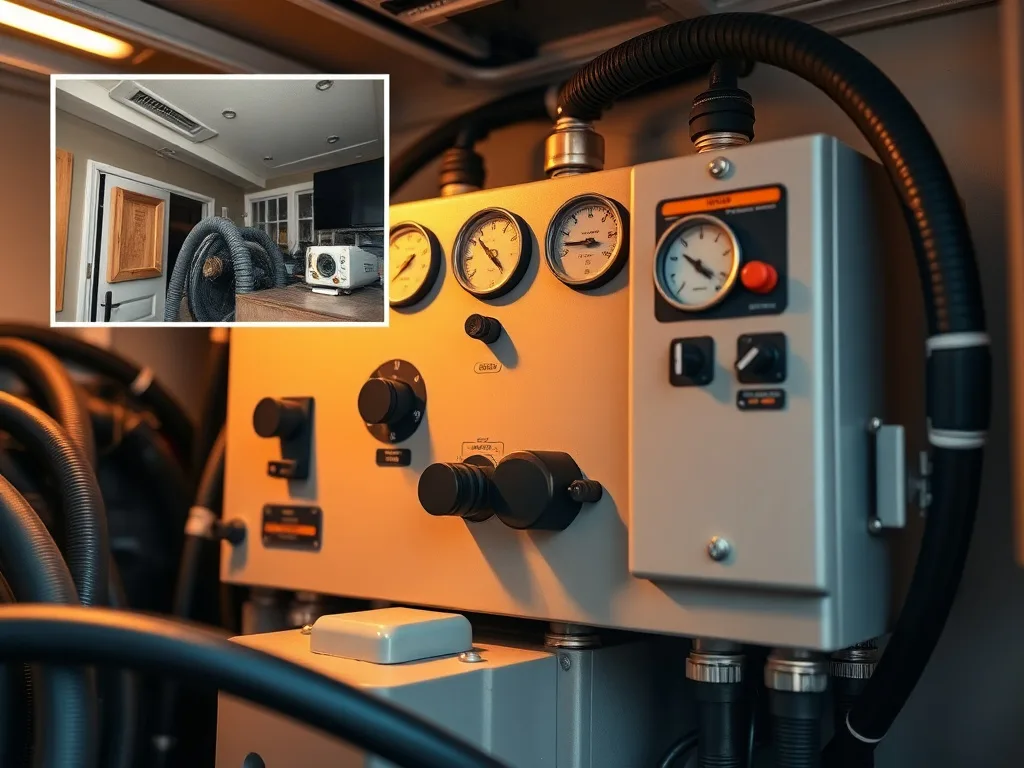
Electrical and generator specification is where a lot of stock rigs fall short for growing operations, because the factory default is sized for a single proportioner and a modest accessory load — not for a second gun, an upgraded air dryer, block heaters, or interior climate control running through a Canadian winter. A custom build starts from the actual equipment load: proportioner draw, hose heat, air compressor, transfer pumps, lighting, and climate-control accessories all get totaled with roughly 15% headroom built in, and the generator gets sized to that number rather than a generic spec sheet. Diesel generators in the 21-60kW range and gas units in the 18-22kW range cover most configurations, with the higher end reserved for multi-gun and dual-proportioner builds carrying a heavier simultaneous load.
Insulated-wall construction is the other half of climate control, and it matters more in the Canadian market than almost anywhere else these builds ship. An insulated trailer shell keeps interior temperatures stable enough for the proportioner and hose system to perform consistently whether the rig is parked on a job site in January or running back-to-back stops through a July heat wave. That insulation package gets specified alongside the heating and ventilation equipment installed inside the build — not bolted on afterward — so the electrical load for climate control is already accounted for in the generator sizing rather than becoming an unplanned draw discovered on the first cold morning.
Getting this wrong shows up fast in the field: a generator sized for the factory default that's asked to run a second gun, a block heater, and interior climate control simultaneously will trip, brownout, or shorten its own service life. Getting it right at the build stage means the rig can add equipment later without a mid-life generator swap, because the headroom was planned in from day one.
- Generator sized to total equipment wattage plus roughly 15% headroom, not a generic default
- Diesel 21-60kW or gas 18-22kW generator ranges cover the large majority of custom configurations
- Insulated-wall shell keeps proportioner and hose performance consistent across Canadian seasonal swings
- Climate-control electrical load planned into generator sizing from the start, not added after the fact
- CSA certification applies to electrical components installed during the build
Multi-Gun & Dual-Proportioner Builds for Larger Crews
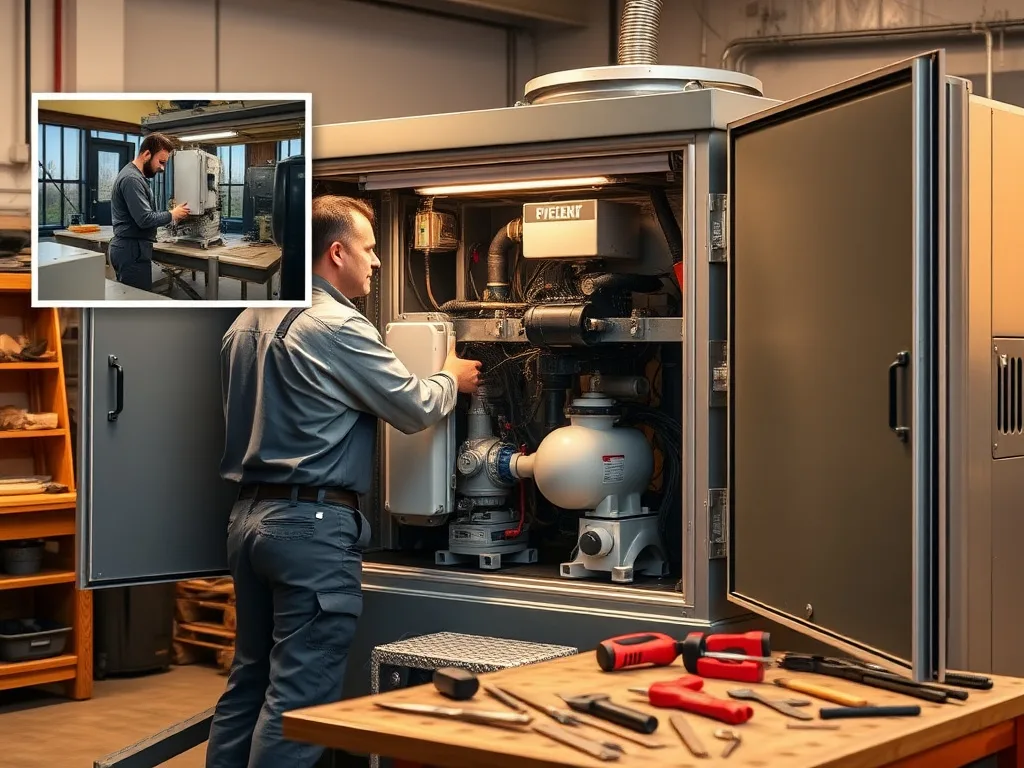
A single-gun, single-proportioner rig is the right tool for a two-person crew, but it becomes a bottleneck once an operation is running a three- or four-person crew on a large commercial or new-construction job. Multi-gun builds add a second heated hose line and gun station off the same proportioner where the job mix supports it, letting two applicators work simultaneously without doubling the machine footprint. Dual-proportioner builds go a step further, installing two independent proportioners — commonly a Graco Reactor 2 pairing, or a Graco/PMC or Graco/Gusmer combination depending on what an operation already runs — so two crews can spray at full independent output rather than sharing one machine's ceiling.
The tradeoff is straightforward: multi-gun and dual-proportioner configurations require more interior volume, a larger generator, and a heavier electrical build than a standard single-line rig, which is why they lean toward the enclosed-trailer platform rather than a truck-box or skid. They also cost more, both from the added proportioner/hose hardware and the larger generator needed to run everything simultaneously without brownout risk.
The deciding factor is usually sustained job volume rather than crew headcount alone — an operation booking enough large commercial or multi-unit work to keep two applicators running full days benefits from the throughput; a crew that occasionally doubles up but mostly runs single-gun work is often better served by a standard build plus a rental unit for the occasional overflow day.
- Multi-gun builds add a second heated hose and gun station off one proportioner for simultaneous spraying
- Dual-proportioner builds install two independent machines for two crews at full independent output
- Best suited to enclosed-trailer platforms given the added interior volume and electrical load
- Evaluate by sustained job volume, not just crew headcount, before committing to the upgrade
Build Timeline: From Order to Delivery
Custom builds run on a fabrication timeline rather than an off-the-lot timeline, breaking down into a handful of distinct phases. The process opens with a spec consultation — platform selection, electrical and generator sizing, proportioner configuration, insulation package, and any branding or wrap prep get locked down and confirmed in writing before ordering begins. From there, chassis or trailer procurement and major component ordering (proportioner, generator, hose system) run in parallel, since long-lead items like a dual-proportioner setup or a specific generator size can be the pacing factor for the whole build.
Fabrication covers the physical build-out: framing and insulating the interior shell, running and testing the electrical system, mounting and plumbing the proportioner and hose reels, installing the generator, and completing interior finish work. Function checks follow — electrical tested under load, the proportioner run through its full cycle, the generator verified against the sized load — before the rig is signed off as ready. Wrap and branding prep, where ordered, typically happens as one of the final steps so the exterior surface is fully cured and ready for vinyl application without rework later.
Total timeline varies with configuration complexity — a standard single-gun trailer build moves faster than a dual-proportioner, multi-gun configuration with a full insulated shell and custom wrap prep, since the latter carries more long-lead components and fabrication hours. Locking the spec early and confirming component availability up front are the two biggest levers for keeping a build on schedule.
- Spec consultation locks platform, electrical, generator, and proportioner configuration before ordering
- Chassis/trailer and major components (proportioner, generator) ordered in parallel to manage lead time
- Fabrication covers framing, insulation, electrical run, and proportioner/hose mounting
- Function checks under load precede final sign-off and delivery
- Wrap/branding prep runs as a late-stage step once the exterior surface is build-complete
Branding & Wrap-Ready Builds for Fleet Identity
A spray foam rig spends a lot of its working life parked in driveways, job sites, and highway shoulders in full public view, which makes it one of the more effective rolling billboards a contracting operation owns. Wrap-ready builds treat the exterior surface as part of the spec from the start rather than an afterthought applied to a finished trailer: panel seams, rivet patterns, and surface finish all get planned with vinyl wrap application in mind, so the finished rig accepts a full wrap cleanly instead of showing seams, bubbling, or premature lifting around hardware.
For operations running more than one rig, standardizing the platform and wrap-ready spec across the fleet keeps every unit looking like it belongs to the same business rather than a mismatched collection of trailers acquired at different times. That consistency matters for contractors bidding larger commercial and new-construction work, where a uniform, professional-looking fleet reads as an established operation rather than a single-truck outfit — a meaningful factor in how a general contractor or property manager sizes up a bid.
Branding prep is coordinated inside the build rather than handed off cold to a wrap shop afterward, which keeps the timeline predictable and avoids rework from wrapping a surface not finished with vinyl application in mind.
- Exterior panel and finish spec planned for clean vinyl wrap application, not retrofitted after the fact
- Standardized platform and wrap spec across multiple units keeps a growing fleet visually consistent
- A uniform fleet appearance supports credibility on larger commercial and new-construction bids
- Branding prep coordinated inside the build timeline rather than as a separate after-delivery step
What Affects the Price
Every quote is built around your crew's actual needs. These are the factors that move the number most.
Platform choice
Enclosed trailer, truck-box, and skid/slide-in builds carry different base costs before any customization is added, with trailers generally requiring the largest structural investment.
Electrical & generator sizing
Larger generators, upgraded electrical systems, and insulated-wall climate control add cost proportional to total equipment load and headroom requirements.
Single- vs. multi-gun/dual-proportioner configuration
Adding a second gun station or a second full proportioner is the single biggest driver of cost above a standard single-line build.
Branding & wrap-ready finish work
Wrap-ready exterior prep and any interior finish upgrades are specified and quoted separately from the core mechanical build.
Common Questions
Custom builds typically start at or above the range for a fully-equipped new rig — roughly $150,000-$250,000+ CAD, with entry-level electric packages from around $145,000 — since a custom build layers platform selection, generator sizing, insulation, and any multi-gun or dual-proportioner tooling on top of the base configuration. Multi-gun and dual-proportioner builds land toward the higher end of that range given the added hardware and electrical capacity required.
It comes down to crew size and travel pattern. Enclosed trailers offer the most interior volume and suit growing fleets standardizing specs across multiple units. Truck-box builds suit long rural routes and single-vehicle simplicity. Skid/slide-in units suit smaller crews or operations that already own a capable truck and want the lowest cost of entry.
Not necessarily — the deciding factor is sustained job volume more than headcount alone. A crew that regularly doubles up on large commercial or multi-unit jobs benefits from dual-proportioner throughput; a crew that occasionally splits a big job but mostly runs single-gun work is often better served by a standard build supplemented with a rental unit for overflow days.
Custom builds are generally financed the same way a new rig purchase would be, subject to the lender's standard terms for new equipment — typically up to 60 months at competitive rates, with the exact terms depending on time in business, credit, and down payment. Confirm financing structure for a specific custom configuration when the build spec is finalized.
Timeline depends on configuration complexity. A standard single-gun trailer or truck-box build moves faster than a dual-proportioner, multi-gun configuration with a full insulated shell and wrap prep, since the latter carries more long-lead components. Locking the spec and confirming component availability during the initial consultation are the biggest levers for keeping a build on schedule.
Explore Related Equipment & Services
Ready to talk custom rig builds?
Tell us what your crew runs and what you need, and we'll put together a clear, no-obligation quote.