New vs. Used Spray Foam Rig: The Real Total Cost of Ownership in Canada
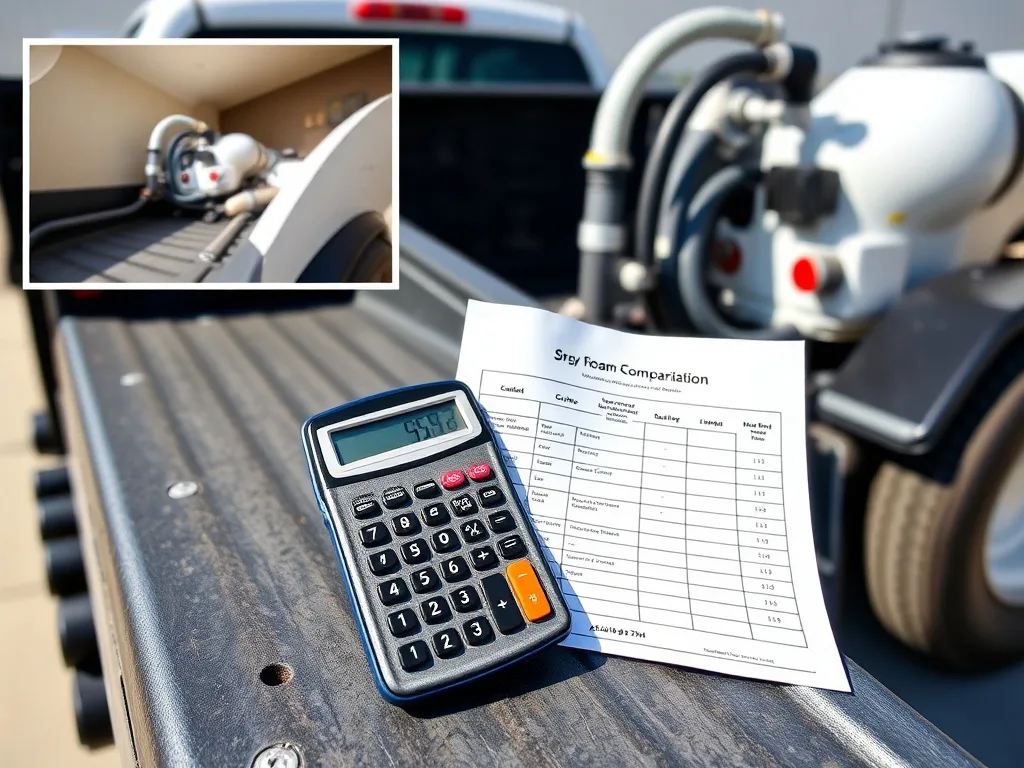
If you're reading this, you've probably already decided you need a rig — the question in front of you right now is a real one: a specific new-rig quote sitting in your inbox versus a specific used listing you found through a dealer or a private seller. The instinct at this stage is to compare the two numbers at the bottom of the page and go with whichever is lower. That instinct is exactly what costs contractors money. The purchase price is only the entry fee. What you actually pay to own and run that rig over the next three to five years depends on financing terms, how often it breaks down, whether parts and service are easy to get, and what the rig is worth when you're ready to move it along. This is a total cost of ownership (TCO) breakdown built specifically for a contractor comparing a real new quote against a real used listing — not a general buyer's guide to picking a rig.
Why "Cheapest to Buy" Isn't "Cheapest to Own"
Two rigs can look identical on a spec sheet and cost completely different amounts to keep running. A used rig at $75,000 CAD with a tired proportioner and 4,000 hours on the pump is not automatically cheaper than a new rig at $170,000 CAD once you account for the repair bills, missed billable days, and shorter useful life ahead of it. Conversely, a new rig isn't automatically the smarter buy just because it comes with a warranty sticker — if the financing structure eats your margin on every job for the next five years, the math can flip the other way. Total cost of ownership means adding up four things side by side for each option: the purchase price, the cost of financing that purchase, the cost of downtime and service over the ownership period, and what you'll recover in resale or trade-in value at the end. Only once you've stacked all four numbers do you know which rig is actually cheaper.
Step One: The Upfront Cost Comparison
Start with what's actually on the table. In the Canadian market right now, a new spray foam rig runs from roughly $145,000 CAD for an entry-level electric package up through $150,000-$250,000+ CAD for a fully equipped diesel trailer rig with a proportioner, generator, heated hose bundle, transfer pumps, gun package, air dryer, and insulated trailer shell. Used and refurbished rigs, by contrast, start from around $60,000 CAD, with pricing climbing from there depending on hours, brand, and how thoroughly the unit has been serviced and reconditioned before resale.
- Entry-level new electric rig package: from ~$145,000 CAD
- Fully equipped new diesel trailer rig: ~$150,000-$250,000+ CAD
- Used/refurbished rig (dealer-serviced): from ~$60,000 CAD, rising with hours and condition
- Used rig bought privately, unserviced: often the lowest sticker price, but with the least cost visibility
That gap — often $80,000-$150,000 CAD between a new build and a used unit — is the number that pulls most contractors toward the used listing. It's a legitimate advantage and the reason our used and refurbished rigs inventory moves quickly. But it's also just the first line of the spreadsheet. If you're weighing a specific new-rig sales quote against a specific used or refurbished listing, the next three sections are where the comparison actually gets decided.
Step Two: Financing Terms Change the Real Monthly Number
Almost nobody pays cash for a rig outright, and the financing structure attached to each option is different enough that it changes the comparison on its own. New rigs typically qualify for longer amortization — terms up to 60 months at roughly 5.99% — because lenders view new equipment with a full manufacturer warranty as lower risk collateral. Used rigs are usually financed over a shorter window, up to 36 months at roughly 4.95%, reflecting the shorter remaining useful life a lender is willing to lend against. Some rig financing and leasing programs offer $0-down options on qualifying new-rig purchases, which changes the day-one cash outlay significantly even though it doesn't change the total interest paid over the term.
Run the numbers and the comparison gets more interesting than the sticker prices suggest. A $200,000 CAD new rig financed over 60 months at 5.99% produces a materially lower monthly payment than the same-size loan compressed into 36 months — even before you factor in that a used rig's total loan amount is smaller. But a $70,000 CAD used rig financed over 36 months at 4.95% still clears its loan and becomes fully-owned equipment years before the new rig does, at which point every job it runs is pure margin instead of a payment. Whether that faster payoff outweighs the new rig's lower monthly hit depends entirely on your cash position and how many billable days you're running per year — which is exactly what the decision framework below is built to sort out.
Rule of thumb: don't compare monthly payments in isolation. Compare monthly payment plus expected monthly downtime and repair cost exposure. A lower payment on a higher-risk used unit can still lose to a higher payment on a rig that never sits idle.
Step Three: Downtime Risk Is the Cost Nobody Puts on the Invoice
This is the line item that sinks contractors who bought purely on sticker price. A proportioner with 3,000-5,000+ hours on it, heated hose bundles that have been through multiple freeze-thaw cycles, and transfer pumps nearing the end of their service life all fail more often — and they tend to fail mid-contract, not on a convenient Tuesday in the shop. A single day of a rig sitting idle waiting on a part or a technician isn't just a repair bill; it's a full day of lost billable revenue on top of that bill, plus, in a tight-crew shop, a crew standing around with nothing to spray. For a two- or three-man crew billing a typical day rate, a rig down for three or four days over a mechanical failure can cost more in lost production than the price gap between the new and used unit in the first place.
This is where the comparison has to get specific rather than theoretical. Ask for the hour count and full maintenance history on any used listing before you compare it to a new quote — a well-documented unit from our used and refurbished rigs program with a completed mechanical inspection checklist carries meaningfully less downtime risk than the same age and hours bought privately with no service records. It's also worth knowing what your options are before a failure happens, not after: our rig service and repair program covers scheduled maintenance and rush/emergency repair for both new and used units, our rig parts and components program stocks gun tips, mix chambers, O-ring kits, pump repair kits, and heated hose components for fast turnaround on the failures that actually take a rig down, and our rig rentals program exists specifically so a rig failure mid-contract doesn't mean a stalled job — you can bridge the gap with a rental while yours is in the shop instead of eating the full downtime cost.
Step Four: Warranty and Service Network Access
A new rig purchased through our new rig sales program carries manufacturer warranty coverage on the proportioner, generator, and major components — which converts a chunk of that downtime risk from your cost column into the manufacturer's. That warranty coverage, combined with a lead time you can plan around, is a real part of the new-rig premium, not just a marketing line.
A used rig's protection against downtime depends entirely on inspection quality, not on a warranty document. A used unit that's gone through a proper mechanical inspection and reconditioning process before sale — the standard our used and refurbished rigs listings are held to — carries meaningfully lower risk than the same rig bought privately with no documented service history. Parts and service network access also varies by brand: Graco Reactor 2 (E-XP2 and E-30 Elite), PMC, and Gusmer (H-20/35) proportioners all have different parts availability and field-service footprints across Canada, which is worth checking against our proportioner sales comparison before you commit to a used unit built around a brand with a thin local service network in your region.
Step Five: The Resale Value Curve
The other end of the ownership period matters just as much as the beginning. A well-maintained Graco, PMC, or Gusmer rig with clean service records holds value noticeably better than a neglected unit of the same age, because the next buyer is pricing in exactly the same downtime-risk math you're doing right now. Rigs that have followed a documented maintenance schedule, kept original components rather than mismatched aftermarket substitutes, and avoided major off-ratio incidents typically resell in a narrower band relative to their original price than rigs with gaps in their history.
This cuts both ways in a new-vs-used comparison. A new rig depreciates hardest in its first two to three years, so if you're planning to trade up again in that window, the used-rig route may actually preserve more of your capital. But if you're planning to run the rig for five-plus years and then sell or trade it, a new rig maintained on a proper service schedule — and, if your growth plans call for something purpose-built, a custom rig build matched to your crew size and travel radius from day one — tends to hold a stronger resale position than a used rig bought partway through its service life, simply because you control its full maintenance history from day one instead of inheriting an unknown one.
Step Six: The Cross-Border and Import Factor
Most of the proportioners at the heart of any rig — Graco, PMC, Gusmer — are US-manufactured, and that shapes the cost and timeline differently depending on whether you're ordering new or buying an already-imported used unit. A new rig ordered through a Canadian dealer is typically already accounted for under CUSMA/USMCA trade terms and CSA certification requirements on the electrical and generator components, with the import and customs handling built into the dealer's process and lead time rather than left for you to sort out. A used rig that's already in Canada has effectively already cleared that process once — which can simplify your purchase — but it's still worth confirming the unit's CSA certification status on its electrical components and getting clear documentation of how it originally entered the country, particularly if you're buying privately rather than through a dealer. Either way, this is a practical, not legal, consideration: confirm the specifics with your dealer or a licensed customs broker before you sign, especially on a private used purchase where paperwork may be incomplete.
A Simple Decision Framework: New, Used, Financed, or Rented?
There's no single right answer here — the right choice depends on four things about your business, not on which rig is objectively "better." Run through these honestly before you sign anything:
- Crew size: A one- or two-man operation with unpredictable job flow often can't justify the carrying cost of a fully equipped new rig — a well-inspected used unit or a rental for peak season fits the cash flow better.
- Annual billable days: If you're running 180+ billable days a year, downtime cost dominates the equation and tips the math toward new or a thoroughly reconditioned used unit with strong service backing, since every idle day is expensive at that volume.
- Cash position: Strong cash reserves or a $0-down new-rig financing program change what's affordable up front; thin reserves make a lower-financed used-rig payment, or a short-term rental while you build capital, the safer path.
- Risk tolerance: Contractors who can absorb an unplanned week of downtime without it threatening a contract can take on more used-rig risk in exchange for the lower purchase price. Contractors who can't should weight toward new, a rental buffer, or a used unit backed by an inspection and warranty-equivalent service plan.
- Growth trajectory: If you're about to add a second or third rig, financing structure and how it affects future borrowing capacity matters as much as the price of this one purchase — worth discussing as part of financing a 2nd or 3rd rig before you commit to either option.
For a lot of contractors, the honest answer isn't strictly "new" or "used" — it's a combination. Rent through a first busy season to validate demand before committing capital, buy a well-inspected used rig as a second unit for overflow capacity while your primary rig stays new and under warranty, or finance a used rig short-term while saving toward a custom-built new rig once your crew and route are established. All of these are legitimate TCO-driven strategies, not compromises.
Putting the Numbers Side by Side
Take a concrete example. A new fully-equipped diesel trailer rig at $190,000 CAD financed over 60 months at 5.99% carries manufacturer warranty coverage, a predictable lead time, and minimal expected downtime in years one through three. A comparable used rig at $85,000 CAD with 2,200 hours, financed over 36 months at 4.95% after a documented mechanical inspection, costs roughly half as much up front and pays off in half the time — but carries a higher probability of a proportioner or pump repair inside that same three-year window, and a shorter runway before the next major overhaul. Neither number tells you which is cheaper on its own. The contractor running 220 billable days a year with a tight two-week job backlog cannot absorb a surprise five-day repair delay and should weight toward the new rig or a very thoroughly inspected, service-backed used unit. The contractor running a leaner 90-day seasonal schedule with slack in the calendar can absorb that same repair risk far more easily and comes out ahead financially on the used rig, even after factoring in an occasional repair bill.
Get Your Specific Numbers Compared
The math above works with real Canadian pricing and financing ranges, but your actual decision should run on your specific new quote and your specific used listing, side by side, with financing pre-qualification attached to both. If you've got a new-rig quote in hand and a used listing you're weighing against it, request a side-by-side comparison and financing pre-qualification and we'll run the total cost of ownership numbers — purchase price, financing terms, expected downtime exposure by hours and brand, and resale positioning — against your actual crew size and billable-day volume, not a generic average. Call 844-967-5247 or email josh@contractorschoiceagency.com to get started.
Frequently Asked Questions
Not necessarily. A used rig almost always has a lower purchase price and a smaller financed monthly payment, but higher expected downtime and repair costs can close that gap or even reverse it for a contractor running a high volume of billable days. The only way to know for certain is to compare the specific used listing's hours and service history against a specific new quote's warranty and financing terms, rather than assuming the lower sticker price wins automatically.
Entry-level electric rig packages start around $145,000 CAD, while fully equipped diesel trailer rigs with a proportioner, generator, heated hose bundle, transfer pumps, gun package, air dryer, and insulated trailer shell typically run $150,000-$250,000+ CAD depending on configuration. Custom builds matched to a specific crew size or travel radius can shift that range further.
New rigs commonly qualify for terms up to 60 months at roughly 5.99%, since lenders view new equipment with full manufacturer warranty coverage as lower-risk collateral. Used rigs are typically financed over a shorter window — up to 36 months at roughly 4.95% — reflecting the shorter remaining service life. Some new-rig purchases qualify for $0-down programs, which changes day-one cash outlay without changing total interest paid.
Add your crew's lost billable revenue for each idle day to the actual repair bill, not just the repair bill alone. A rig with high hours on the proportioner and pump, or an undocumented service history, carries a meaningfully higher probability of a mid-contract failure than a low-hour unit that's been through a documented mechanical inspection — which is why hour count and service records matter as much as price when comparing listings.
Used rigs generally don't carry manufacturer warranty coverage the way new rigs do. Protection instead comes from the quality of the mechanical inspection and reconditioning the unit went through before resale — a properly serviced and documented used rig carries far less risk than the same unit bought privately with no service records. Ask for full inspection documentation before comparing a used listing's price against a new quote.
Graco Reactor 2 (E-XP2/E-30 Elite), PMC, and Gusmer (H-20/35) units all hold value reasonably well when properly maintained, but documented service history matters more to resale price than brand alone. A rig that has followed a scheduled maintenance program, avoided major off-ratio incidents, and kept original components typically resells in a tighter range relative to its original price than a comparable rig with gaps in its maintenance record.
Most proportioners are US-manufactured, so a new rig ordered through a Canadian dealer typically has CUSMA/USMCA trade terms and CSA certification on electrical and generator components already accounted for in the dealer's process. A used rig already in Canada has effectively cleared that process once, but it's still worth confirming CSA certification status and import documentation, especially on a private purchase. This is a practical consideration, not legal advice — confirm specifics with your dealer or a licensed customs broker.
Renting makes sense for one-off jobs, overflow capacity during a busy stretch, or as a bridge while your own rig is down for repair, without committing capital to a purchase. It's generally not the lower-cost path for a contractor running consistent year-round volume, where ownership cost per billable day comes out lower than a day rate over time — but for validating demand before buying, or covering a short-term gap, it's a legitimate part of the new-vs-used-vs-rent decision rather than a fallback option.
Have questions about the right rig for your crew?
Call, email, or request a quote and we'll help you spec the setup that fits your jobs, budget, and season.