Buying a US-Built Spray Foam Rig in Canada: Cross-Border, CSA, and What to Ask Before You Order
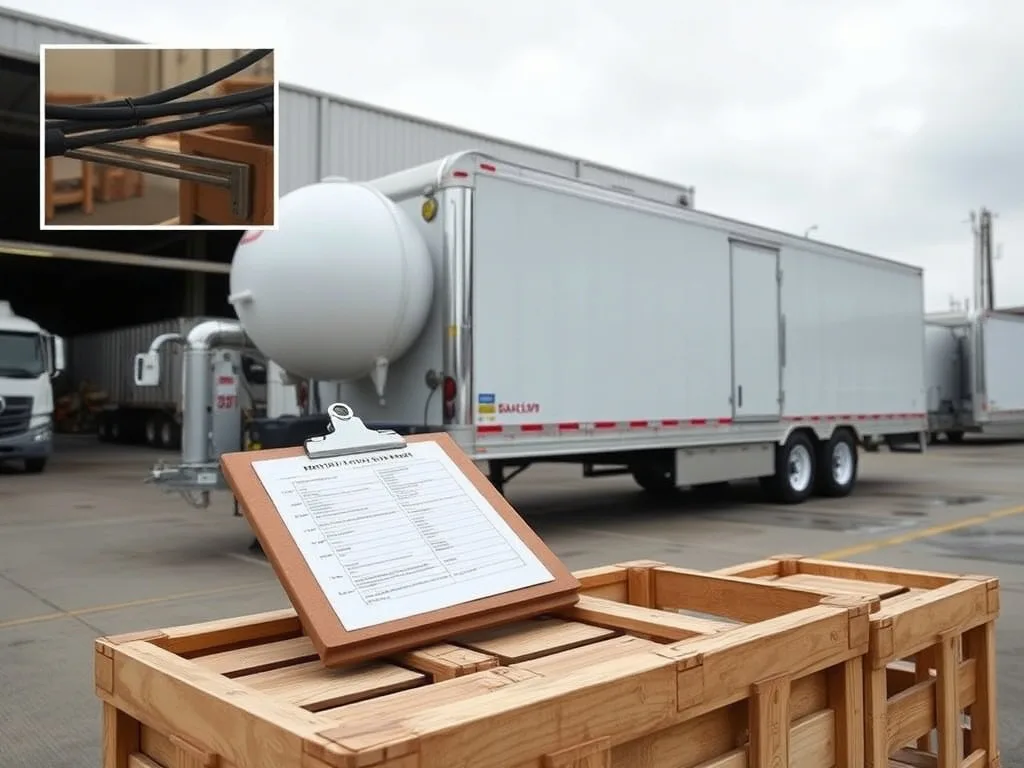
Open the electrical panel on almost any spray foam rig running in Canada and you'll find the same story: the proportioner is a Graco Reactor, a PMC unit, or a Gusmer H-20/35 — all designed and built in the United States. That's not a knock on Canadian capability, it's just how the spray foam equipment market has shaken out. Trailers and truck bodies may be fabricated on either side of the border, but the core proportioning technology almost always starts its life as a US import.
That's fine — it's the industry standard, and dealers move US-built rigs and components into Canada constantly. But "constantly" doesn't mean "automatically." Whether you're ordering a brand-new fully-equipped rig, a standalone proportioner to add to your fleet, or a custom build with US-sourced components, there's a cross-border paper trail involved, and it's worth understanding the shape of it before you sign a purchase order — not after your rig is sitting at a bonded warehouse waiting on documents.
This article is a practical orientation, not legal, tax, or customs advice. Import rules, tariff classifications, and CUSMA/USMCA treatment can change, and your specific situation (business structure, province, how the rig is titled, whether it's new or used) affects the details. Always confirm the current requirements with your dealer and a licensed customs broker before you order.
Why Almost Every Rig Crosses the Border Somewhere
Even a rig fully assembled by a Canadian fabricator typically has a US-built proportioner, and often a US-built generator or transfer pump system, bolted into a Canadian-built trailer or truck body. So the cross-border question isn't just "am I importing a whole rig" — it's baked into nearly every new-rig purchase, most custom builds, and any standalone proportioner order, even if the final invoice comes from a dealer with a Canadian address and a Canadian shop. Understanding that helps frame the right questions, because the answers depend on exactly what's crossing the border and in what form.
What to Ask About Customs Handling
The single biggest variable in how smooth this goes is who actually handles the customs process and when. Some dealers import in volume, clear equipment through their own established broker relationships, and sell you a rig that's already landed in Canada — in that case, most of the cross-border work is invisible to you. Other builds are more of a direct pass-through, where you're effectively importing a specific piece of equipment yourself with the dealer's help. Neither approach is wrong, but you want to know which one you're in before you commit.
- Is the rig or proportioner already cleared and sitting in Canadian inventory, or will it be imported specifically for my order?
- Who is the importer of record — the dealer, the manufacturer's Canadian distributor, or me?
- What's the realistic timeline from order to delivery once customs clearance is factored in?
- Has this exact model crossed the border before, or is this a newer configuration that might need fresh tariff classification?
- What happens if clearance is delayed — does that push my delivery date, and is that spelled out anywhere in writing?
CUSMA/USMCA: Why It's Worth Asking About, Not Assuming
The Canada-United States-Mexico Agreement (CUSMA, still called USMCA on the US side) is the trade framework that governs a lot of how US-manufactured goods move into Canada, including preferential tariff treatment for qualifying goods. Because Graco, PMC, and Gusmer proportioners are American-made, CUSMA considerations can be directly relevant to how a rig or component is classified and what duty treatment applies. The key word is "can be" — origin rules, rules of origin certification, and how equipment gets classified under the harmonized tariff schedule are detailed enough that a general contractor shouldn't be expected to work it out from first principles, and honestly neither should we in a blog post.
What's practical is asking your dealer directly whether the equipment you're buying qualifies for CUSMA-preferential treatment, and if so, whether that's already reflected in your quoted price or is something that gets sorted out during clearance. A dealer who imports regularly should have a straightforward answer. If they don't, that's a signal to loop in a customs broker before you finalize anything.
CSA Certification on Electrical and Generator Components
This is one of the more concrete, checkable items on the list, and it matters for more than paperwork reasons — it can affect insurance, worksite compliance, and whether an electrical inspector signs off on a rig's onboard systems in some jurisdictions. US-manufactured equipment is built to US electrical standards (UL and similar), which don't automatically satisfy Canadian requirements. CSA (Canadian Standards Association) certification — or an equivalent recognized mark under Canada's accreditation framework — is what Canadian electrical code generally looks for on electrical and generator components.
Before you order, ask specifically:
- Does the generator on this rig carry CSA certification, or an equivalent accepted mark, out of the box?
- Are the proportioner's electrical control components CSA-listed, or has the dealer done any re-certification or field labeling to bring them into compliance?
- If the rig is custom-built with a US generator dropped into a Canadian trailer, who is responsible for ensuring the finished electrical system meets Canadian code — the fabricator, the generator supplier, or a third-party electrician?
- Can the dealer provide documentation of certification status in writing, not just verbally?
This isn't a box-ticking exercise for its own sake — a rig with electrical components that can't be verified as compliant can become a real problem if it needs an inspection, if there's a warranty claim, or if an insurer or municipality asks questions down the road. Get the certification status in writing before you order, not after the rig is on your lot.
GST and Import Paperwork: What to Have Ready
Bringing equipment across the border generally involves GST (or the applicable harmonized sales tax depending on your province) assessed at import, along with standard import documentation — commercial invoices, a bill of lading, tariff classification, and depending on the equipment, potentially additional forms. If you're a GST-registered business, there may be mechanisms to recover or offset some of that tax through your regular filing, but exactly how that works depends on your business structure and how the rig is used — again, not something to guess at.
- Ask your dealer whether the quoted price is landed-and-cleared, or whether GST and duty are added separately at delivery.
- Ask what documentation you'll receive at delivery — you'll want the full paper trail for your own accounting records and potential future resale.
- If you're financing the rig, confirm with your lender whether import costs are rolled into the finance amount or due separately at delivery.
- If this is your first cross-border equipment purchase, ask your accountant how the GST-at-import gets handled on your books before the invoice lands.
Work the Broker Relationship, Not Just the Dealer Relationship
A licensed customs broker is the person whose job it actually is to get the classification, duty treatment, and CUSMA eligibility right — and a good one can save you real money and real delay. Established rig dealers typically already work with a broker as part of how they do business, which is one more reason volume and experience matter when you're choosing who to buy from. If you're doing a more unusual import — a used rig bought privately across the border, for instance, rather than through a dealer — that's exactly the scenario where paying a broker directly is worth it rather than trying to self-clear.
None of the above is a substitute for confirming your specific situation with your dealer and a licensed customs broker. Tariff classifications, CUSMA eligibility, and CSA certification requirements are specific to the equipment, the transaction, and current regulations — ask before you order, get answers in writing, and treat this article as a checklist for that conversation, not a final answer.
The bottom line: buying a US-built rig or proportioner in Canada is completely routine — it's how the vast majority of Canadian spray foam contractors are equipped today. The difference between a smooth delivery and a frustrating one usually comes down to asking these questions up front and getting a dealer who can answer them clearly and in writing. If you're evaluating a new rig, a custom build, or a standalone proportioner and want a straight answer on how the cross-border and CSA side of your specific order will be handled, call us at 844-967-5247 or email josh@contractorschoiceagency.com and we'll walk through it with you before you commit to an order.
Frequently Asked Questions
Not the whole rig necessarily — trailers, truck bodies, and some fabrication can be Canadian — but the proportioner (Graco, PMC, or Gusmer) is almost always US-manufactured, and generators are frequently US-sourced too. That means cross-border considerations touch nearly every new rig purchase in some form. Ask your dealer exactly which components are being imported for your specific order.
It depends on the dealer. Many established rig dealers import in volume and handle customs clearance before the equipment ever reaches you, so you're buying already-landed equipment. Others may involve you more directly in the process. Ask upfront who the importer of record is and what, if anything, is left for you to handle — and confirm the details with a licensed customs broker if you're unsure.
It generally relates to electrical and generator components meeting Canadian electrical safety standards, as opposed to the US standards (like UL) that equipment is typically built to at the factory. This can matter for inspections, warranty, and compliance. Ask your dealer to confirm CSA certification status (or equivalent) for the specific generator and electrical components on your rig, in writing, before you order.
Generally, GST or the applicable provincial sales tax is assessed at import along with standard customs paperwork. Whether that's included in your quoted price or added separately at delivery varies by dealer, and how it's handled on your books depends on your business's GST registration status. Confirm the specifics with your dealer and your accountant rather than assuming either way.
Have questions about the right rig for your crew?
Call, email, or request a quote and we'll help you spec the setup that fits your jobs, budget, and season.